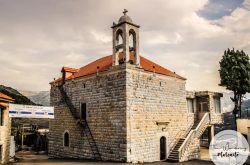
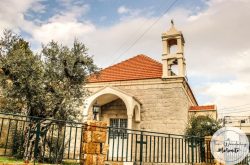
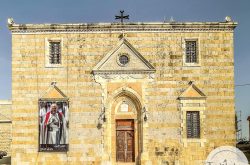
El Mina – The presbytery of Our Lady of Deliverance

El Mina, Lebanon

Other Details

أنطوش سيّدة النجاة

Mina N:1

Tripoli

North

أنطوش سيّدة النجاة - المينا بُنيت الكنيسة الأولى للموارنة في مدينة الميناء أوائل القرن التاسع عشر، وكانت قبوًا مُعتمًا تحت الأرض. كانت الرعيّة آنذاك فقيرة جدًّا وعُهدت خدمتها للرهبان الأنطونيّين، فكان طعام خادم الرعيّة يصله من دير مار سركيس وباخوس إهدن. سنة ١٨٥٠ بُني الأنطوش، وسنة ١٨٨٩ كرّس المطران أسطفان عوّاد الكنيسة الحاليّة، فكان بناؤها بشكل عقدٍ مُصالب بحجرٍ رمليّ. رُمّمت أواخر القرن العشرين. The presbytery of Our Lady of Deliverance - El Mina The first maronite church was built in the Mina in the beginning of the XIXth century. It was then a small underground cellar. The parish was really poor, it was entrusted to an Antonine monk who’s food was brought from the monastery of Sts Sergius and Bacchus Ehden. In 1850 the presbytery was built, and in 1889 the current church was consecrated by Mgr. Estefan Awad Archbishop of Tripoli. The structure is a sandstone crossed vault, restored in the latter half of the XXth century.

Visited 5069 times, 3 Visits today

Reviews are disabled, but trackbacks and pingbacks are open.

Related Listings

Deir El Ahmar – The Church of Our Lady of the Tower

Our Lady of The Tower Maronite Church, Deir Al-Ahmar, Lebanon

كنيسة سيّدة البرج

Deir El-Ahmar

Baalbek

Baalbek-Hermel

كنيسة سيّدة البرج - دير الأحمر

بنى الرومان في دير الأحمر معبدًا لجوبيتير، تحوّل أوائل القرون الوسطى لبرجٍ عسكريّ لم يبقَ من بنائه سوى الطابق الأوّل. خلال القرن العاشر تحوّل الى ديرٍ يعقوبيّ. سنة ١٧٥٩ دمّر زلزال ضخم كنيسة سيّدة الزروع القديمة فتداعى الأهالي لبناء عقدٍ سريريّ كبير فوق آثار البرج، ليصبح البناء كنيسةً جديدةً كبيرة. كُرّست الكنيسة سنة ١٨٤٣ ورُمّمت سنة ٢٠١٧. تضمّ الكنيسة لوحتين للعذراء من عمل كنعان ديب وداوود القرم. كذلك تحتوي على مكتبةً غنيّة بالكتب البيعيّة.

The Church of Our Lady of the Tower - Deir El Ahmar

The Romans built a temple dedicated to Jupiter in Deir El Ahmar. During the High Middle Ages, the temple was converted into a three-storey military tower, but today only the first storey remains. In the 10th century, Jacobite monks used the site as a monastery. In 1759, an earthquake struck the region and destroyed the old church of Our Lady. The people of Deir el Ahmar then decided to build a great cross-vaulted church on the foundation of the tower. The church was dedicated in 1843 and underwent renovation in 2017. The church is home to a manuscript library and two Marian paintings by Kanaan Dib and Dawoud el Qorm. La Iglesia de Nuestra Señora de la Torre - Deir El-Ahmar Los romanos construyeron un templo dedicado a Júpiter en Deir El-Ahmar. A principios de la Alta Edad Media, el templo se convirtió en una torre militar de tres pisos, de la cual actualmente solo queda el primer piso. En el siglo X, los monjes jacobitas utilizaron el sitio como monasterio. En 1759, un terremoto azotó la región y destruyó la antigua iglesia de Nuestra Señora. La gente de Deir el-Ahmar decidió entonces construir una Iglesia de grandes dimensiones con bóveda de crucería sobre los cimientos de la torre. La iglesia fue consagrada en 1843 y se renovó en 2017. La iglesia alberga una biblioteca de manuscritos y dos pinturas marianas de Kanaan Dib y Dawoud el Qorm.

Ibrin – The Holy Family’s convent

Holy Family Convent - Congregation of Maronite Sisters of the Holy Family, Aabrine, Lebanon

دير راهبات العائلة المقدّسة المارونيّات

Aabrine

Batroun

North

دير راهبات العائلة المقدّسة المارونيّات - عبرين

سنة ١٨٩٦ غادرت الأم المؤسِّسة لراهبات العائلة المقدّسة روزالي مع راهباتها من مدرسة بطرس شحادة في جبيل إلى عبرين لتداعي البناء وحاجته للترميم. وشاءت العناية الإلهيّة ان تتدبّر الأموال بيد المطران (البطريرك المكرّم) الياس الحويّك، لشراء بيت ومزرعة واكد الشيخاني في عبرين وتحويلها إلى دير ومدرسة، مع كنيسة ذات زجاجيّات مميّزة، وقبوٍ معقودٍ تحتها، هو مرقد البطريرك الآن. والقبو مزيّن بجداريّات يوسف الحويّك. أصبح دير العائلة المقدّسة الدير الأمّ للجمعيّة وأصبحت الراهبات تُعرفن براهبات عبرين.

The Holy Family’s convent - Ibrin

1896 was a pivotal year for Mother Rosaly the new superior general of the new Maronite congregation of the Holy Family, as the nun moved from Boutros Shehade’s school in Jbeil to the farm estate of Waked el Shikhany in Ibrin. In his diaries Bishop Elias Howayek (later Venerable Patriarch) relates how the money for the purchase was due to the Divine Providence’s intercession. Bishop Howayek transformed with the nuns the estate into a convent with a school and a beautiful church with stained glass windows, and a crypt with Youssef el Howayek’s frescoes (the only Lebanese art deco style paintings). The crypt is also the resting place of Patriarch el Howayek. Since its construction, the convent became the mother house of the Holy Family’s nuns and they are widely known as the Nuns of Ibrin.

Jbeil – Saint John Marcus

Monastery of Saint John Marcus Jbeil Lebanese Maronite Order, Byblos, Lebanon

مار يوحنا مرقس - جبيل

1115

Jbayl

Jbeil

Mount Lebanon

A beautiful Romanesque church, Eglise Saint Jean Marc is the cathedral church of Jbail-Byblos. The Church is dedicated to Saint Jean Mark, the patron saint of the town, who is said to have founded the first Christian community of Byblos. The church itself was built in 1115 A.D by the Crusaders, originally as the Cathedral of Saint John the Baptist. After their departure, earthquakes, invasions and other disasters have repeatedly damaged the structure, and for a few centuries it remained disused. In 1764, Emir Youssef Chehab, of the Druze dynasty that ruled a semi- autonomous Lebanon under the Ottomans, donated the church to L’Ordre Libanais Maronite (Lebanese Maronite Order) which subsequently restored and reopened in 1776 after re-dedicating it to St Jean Marc. British bombardments of Lebanon in 1840 caused further damage, but the church was restored yet again. Eglise Saint Jean Marc continues to serve the Maronite Christian community. One interesting feature in the church is its open- air domed baptistery on the northern side which dates from the original construction in 1115 A.D, The church is situated on Rue de Port, between the port and the archaeological area.